


Since summer 2017, Katica Tanya (Ladybug Farm) has supplied its full energy demand exclusively from renewable sources—that includes heating, cooling, hot water, and electricity.
Ladybird Farm Activity Center in a nutshell
|
Ladybird Farm Activity Center was established in 2002 as a family business. In the past 2 decades, we have continuously developed our services which is a driving principle for us. Our aim is to:
|
 |
 |
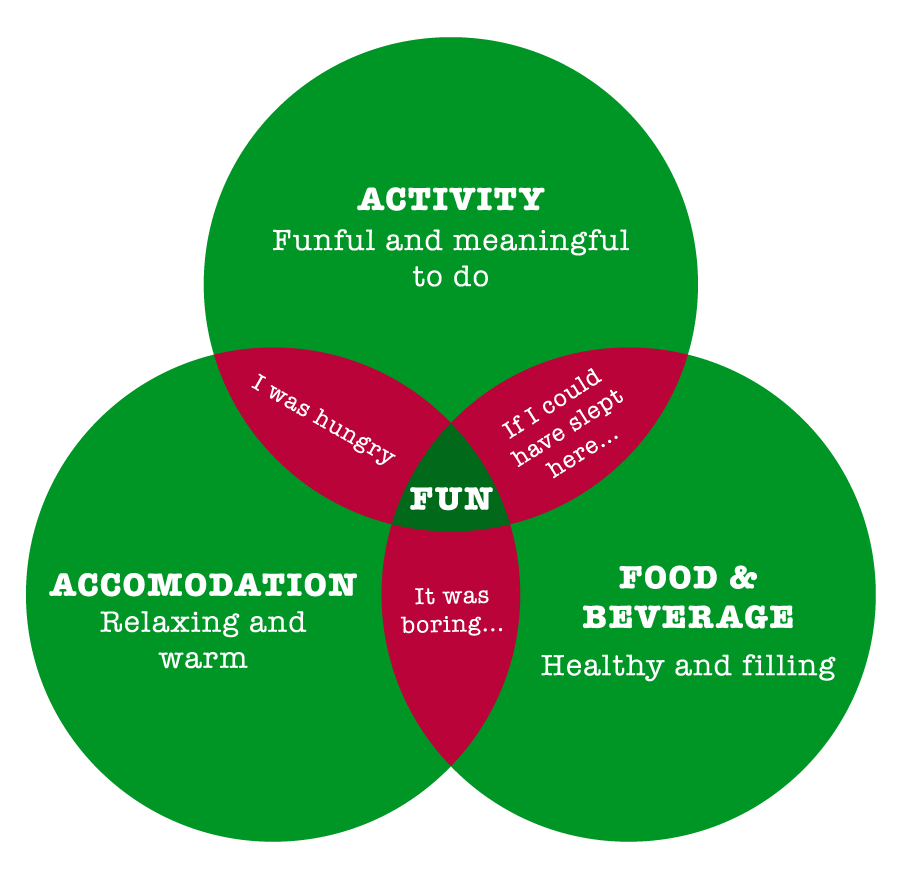
Our product is FUN. We believe that FUN has 3 elements and we aim to provide all three of these elements to the greatest possible extent:
If any of these 3 parts are missing the expected „buzz” won’t be there and the visitor may not return. We thrive on providing outstanding services and exceed the expectations of our guests. |
In the below lines we share our commitment on how we operate in the maximum symbiosis with our nature and present our achievements. We are working on a full English website that will be available in April 2026, however by using the available AI technologies you can freely translate our Hungarian website to your language!
Our key value is to live and operate in harmony with our environment. Let us share 3 proverbs with you:
 |
„We do not inherit the Earth from our ancestors, we borrow it from our grandchildren.”For us, this means that we must use the available natural resources in such a way that there will be enough for our successors. Also, we operate our business in a way that creates the least damage to mother nature. In the sections below we describe our initiatives to achieve this. |
„When the last tree is cut down, the last river is poisoned, and the last fish is caught, then people will realize that money cannot be eaten.”For us this means that profit cannot be the only goal, it must be complemented with other, measurable initiatives that minimize the environmental impact of our operations. We must continuously challenge the ways we work every day and try to find new practices to further decrease the bad environmental impact of our business. In the ESG sections, we introduce 3 additional metrics that measure the extent to which we use the environmental resources and the damaging impact we have for our environment. |
 |
 |
Einstein had a famous saying: "Insanity is doing the same thing over and over again and EXPECTING different results."For us, this means that we have to change our everyday practices if we want to achieve change in our impact on our environment. If we do everything in the same way tomorrow as we do it today why would anything change? |
Thus we must change our consumer habits; and yes, this may reduce some comfort services that we are used to.
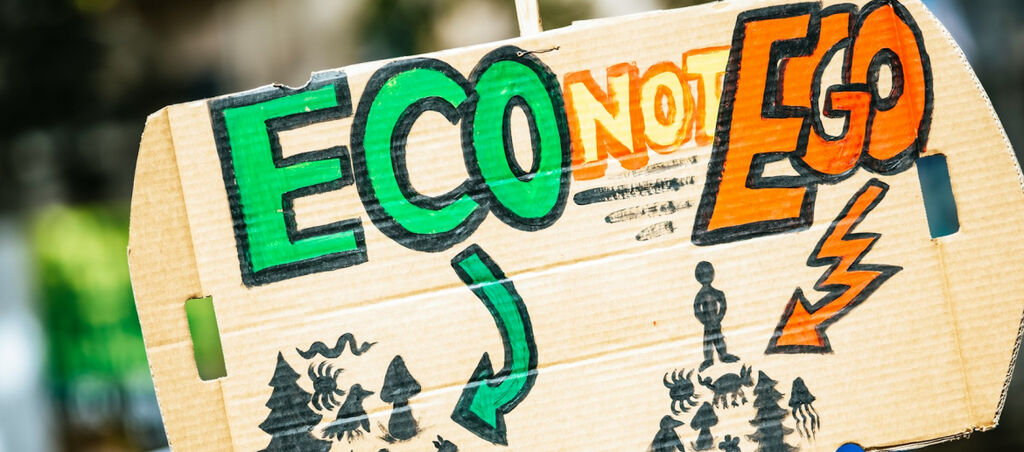
One obvious example: it’s easy to take a cold PET-bottled drink from the fridge, drink it in minutes, and throw the plastic bottle into the trash. But what happens to that PET bottle? Does it get recycled, or is it simply buried in the massive garbage landfill as 90 % of Hungary’s waste is handled? (If you keep reading you will find that recyclability is not the same as actual recycling.)

We banned the sale of PET-bottled soft drinks in 2021; instead we offer 10 kinds of fruit juices tapped into paper cups or your refillable bottle. You just need to get used to carrying a bottle or a water tank — this is the little change! If you read further, in point 10 you can read why we are doing so.
Principles in which we make no compromise
Some principles we apply may appear “naive” or “alien,” but we believe what is unusual today will be the norm of tomorrow.
-

-
We only implement such development that does not consume energy, or if it does, we produce the required energy on site, from renewable sources.

-
We don’t offer “three for the price of two” when one is enough. For us, the goal is not maximizing one‐time sales revenue, instead we intend to provide lasting memories. We hope our visitors will return if they enjoyed their time with us. We believe in conscious purchasing: buy only what you truly and sustainably need. This way there is no waste.

-
We minimize the use of physical materials. Why? Because 20 % of the world’s population – including us, Hungarians – uses 80 % of the physical materials. Imagine what would happen if everybody consumed like we do. We suggest that our visitors buy only what they truly and durably need. The experience, the smile, the joy is what should be taken away.

-
Just because something is cheap does not mean we should waste it! In Hungary, potable water is relatively cheap. However, this should not make us careless. We tend to look at the value of the utility bill rather than the actual water volume we used.

-
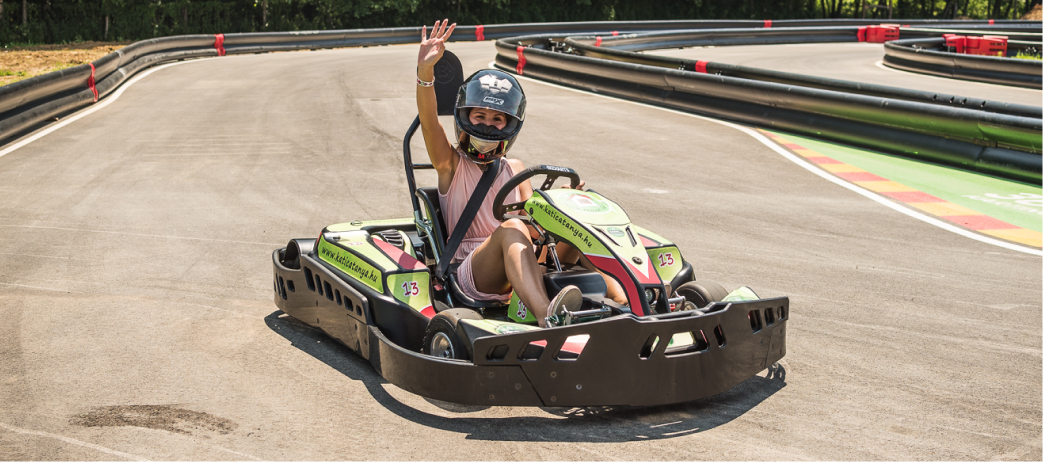
Living in harmony with the environment is our core development principle. Even if a development is profitable, if its environmental damage is permanent, we do not implement it (for example, we do not have fuel based go-karts; instead we use electric go-karts).
All development decisions we make are measured by two equally important factors:
(1) increase guest experience profitably (as a family business, we can develop from our profit), and
(2) the social value of the investment, i.e. its social and environmental impact.
The key factor of this principle is to live in synergy with our environment. So, if a development may have enduring negative impact for our environment, we do not implement it regardless of the profitability.
We ensure the implementation of these principles by using two methods, that are (1) “The total cost of ownership” which takes into account the 3-5 years of operational cost of the investment, also and (2) the continuous analysis of our supply chain. The objective is very clear, we must decrease the environmental damage year by year!
Our strategic objective is to develop our services to a level where a visitor causes less "damage" to the environment, has a smaller ecological footprint, than if they had stayed at home or gone somewhere else.
(The ecological footprint is the impact of human existence on the earth, e.g. volume of garbage and sewage water, use of fossil fuel, etc.)
Concrete steps we have already taken
-
In 2017 we created Katica Tanya’s sustainability map, which we have since rewritten multiple times as we introduce new environmentally conscious solutions.

-
Natural resource metrics:
In 2025, we have introduced 3 new key performance indicators that we use to measure the efficiency of how we use the natural resources. Thse are as follows:
-
“Waste footprint”: landfill waste per 1000 visitors is 39 kg, i.e. an average visitor leaves 39 gramm of landfil waste. (More info in chapter “8. Selective waste collection and waste management”.)

-
“Energy footprint”: electrical and biomass energy per 1000 visitors. As per electricity, thos metric currently is 2400 kWh. So a visitor uses 2.4 kWh electric energy during their funful visit—and all from locally produced renewable energy! (We started measuring biomass energy in June 2025; therefore we can serve reliable data in June 2026.)

-
“Water footprint”: water used per 1000 visitors is 35 m³. So each visitor uses 35 l of water during their visit. (More info in chapter “14. Three water networks: each tap supplies water appropriate to its purpose”.)
We believe, by using such metrics makes our use of natural resources more conscious and efficient.
-
-
Solar farms:
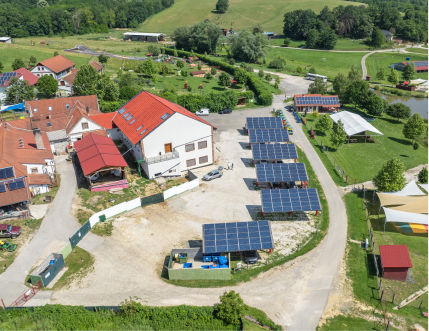
We have a 219.4 kW solar farmparks that covers 100 % of the electricity ned of our Activity Center. Panels are located in 8 spots (in parking lot providing shade, next to the electric go-kart track, on the roofs of go-kart building , the milking station, the Adventure Cave, the small lakeside house, the Event Barn, and on the hillside near the castle). These solar parks produce 230–250 MWh electric energy annually.
-
Solar heat collectors:
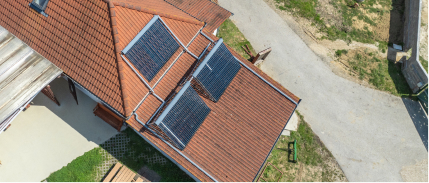
There are 3 heat-absorbing panels on the roof of our maintenance workshop. These panels supply hot water to the kitchen and facilities when the sun shines.
-
Rainwater collectors:
Annually, our region receives 600–700 mm precipitation. Rainwater from roofs flows into a 20 m³ and a 5 m³ underground tanks. This water is filtered and used for grounds maintenance, irrigation, and flushing many of our toilets. Our goal is to flush all of our toilets with rainwater by the end of 2025.
-
Root-zone (constructed wetland) wastewater treatment:
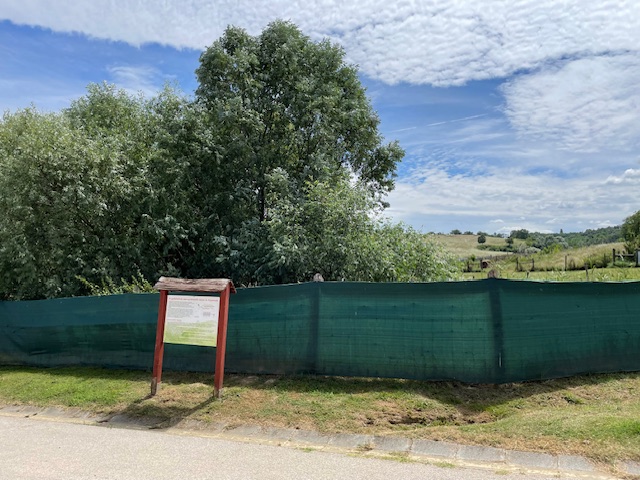
In front of our restaurant terrace, we treat over 90 % of sewage on an ecological way, without chemicals or external energy. By handling our sewage on site (instead of sending it 22 km to a chemical treatment plant), we save about 4,000 km of transport yearly and significant chemical use.
-
Individual wastewater treatment units:
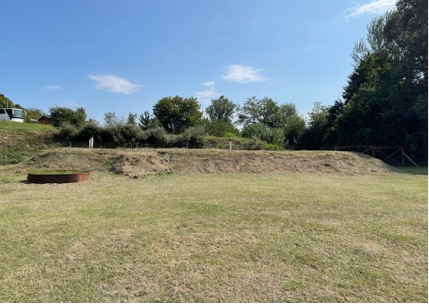
Because of level differences and distance, we could not connect all sewage to the main constructed wetland. Therefore, we have 6 independent, biological treatment units (serving the event barn, water park, outdoor slide, lakeside building, Adventure Cove, and the electric go-kart track). These handle about 10 % of the sewage water.
-
Selective waste collection & waste management:
The simplest way to preserve the environment is collect the waste selectively. In our experience, 90–95 % of household waste is recyclable if separated; only 5–10 % is true residual waste. Everywhere in our facilities, you will find two bins: one for PET, aluminum cans and paper; the other for other waste. Please use the selective bins!
In April 2025, we have scrutinized our waste handling processes to minimize residual or landfill waste. The new process takes 10–15 extra minutes per day, and resulted 80 % reduction in the use of trash bags and 90 % cut in the volume of landfill waste. We introduced a performance metric: Landfill waste per 1000 visitors. That is now 37 kg. In peak season previously 3 large waste containers were hauled; now only one is taken away in every 3 weeks!

-
Pay with waste:
Across Hungary for sure and possibly in Europe, we are the only place where visitors can pay a part of their entrance fee by selectively collecting waste.
If you bring plastic bottles, aluminum cans or paper we count itin your entrance fee up to 10%. So waste is money!
-
No PET-bottled soft drinks:
We do not sell plastic bottled soft drinks here (except mineral water, but we also aim to replace that). Instead, fruit juices can be tapped at stations into paper cups, our water tanks, or your personal water tank.
Why do not we sell plastic bottled beverages? For two reasons:
(1) at the moment there is not enough industrial capacity to reprocess all the selectively collected plastic waste. In other words, even if we collect all plastic waste selectively, it cannot be fully reprocessed, and
(2) a PET bottle can only be reprocessed between 2 and 4 times due to the chemical process that it goes through. It then becomes unreprocessable (while the aluminum cans can continue to be reprocessed time after time).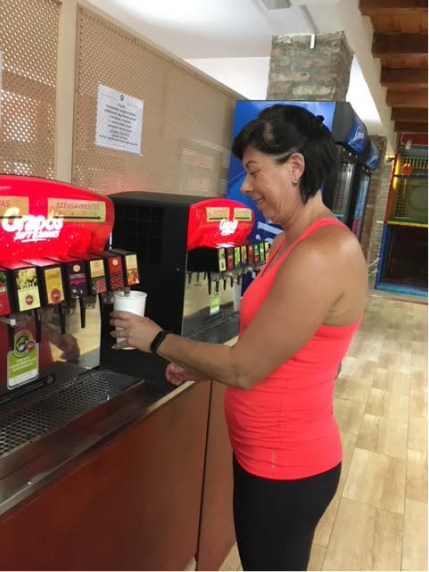
-
We only use biodegradable catering packaging:
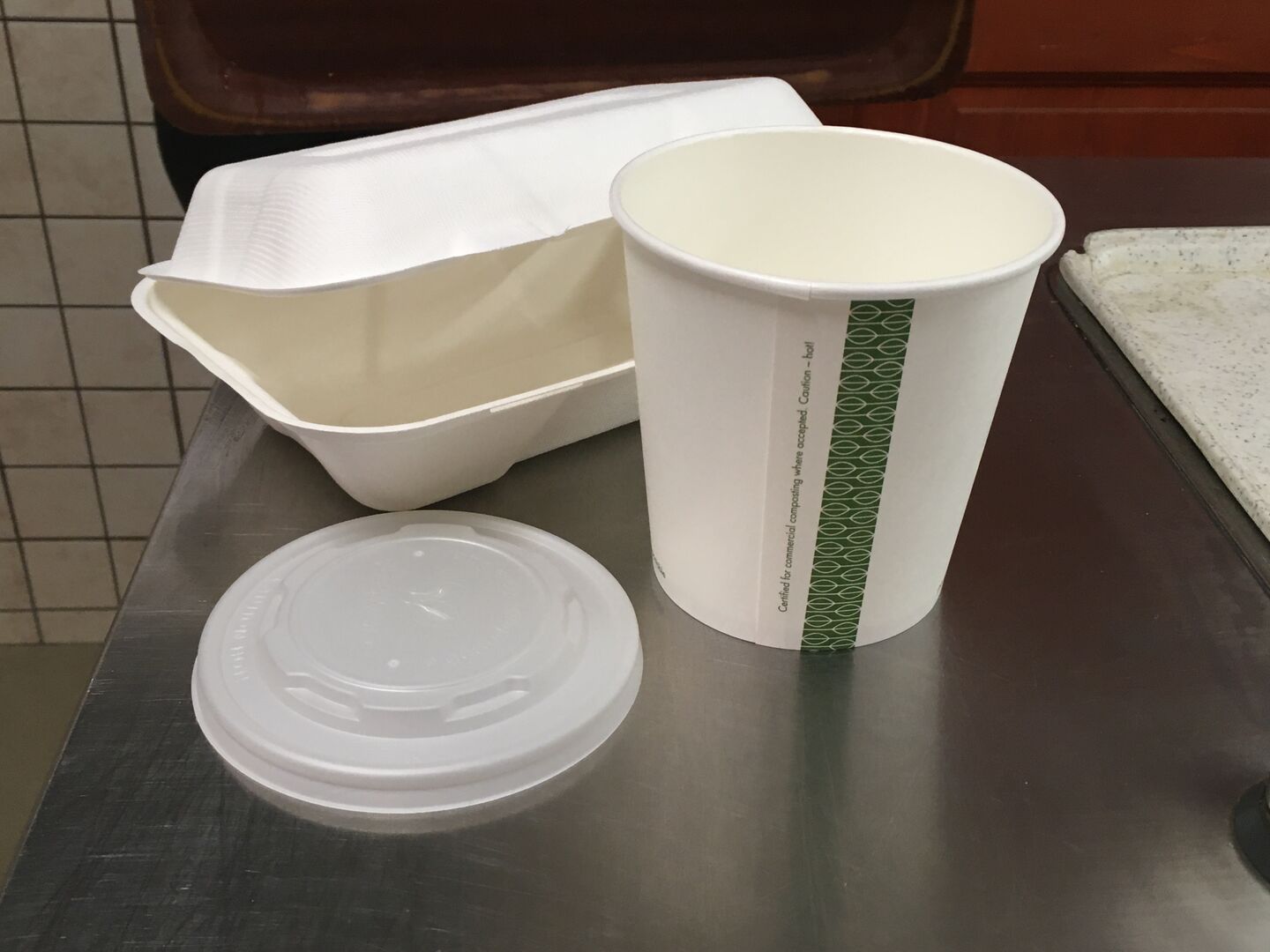
The non-biodegradable, one time use catering packaging such as plastic cups and straws plus packaging such as styrofoam food containers creates huge volumes of non-reusable garbage. We only use biodegradable products such as paper cups and food containers for our catering services. Therefore our ecofootprint is zero in this perspective. It is slightly more expensive but we think this is an important and relatively small change in behavior!
-
LED lighting and motion sensors:
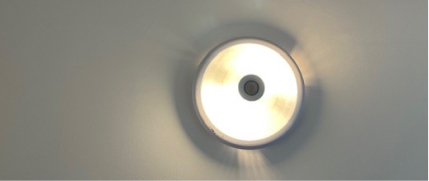
All our lamps and tubes use low-energy LED tech, consuming 70–90 % less energy, yet providing more light.
-
Wind turbine:
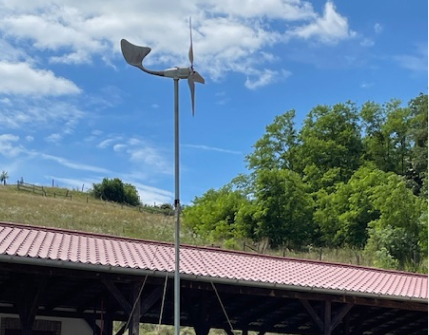
We have a small 300 W windmill that generates electricity that we’re able to store in 2 batteries. This provides power for lighting the “Sustainable Earth Barn”. You can see the windmill in front of the barn.
-
Three water networks: each tap supplies appropriate water
In a normal building there is a single pipe circuit that caries drink ing water from the local water utility company. In our Activity Center we have 3 different circuits:
-
communal circuit that is coming from the local water utility pipe and carries clean water,
-
we have our own well that uses the same source of water that the utility company uses. However, we do not use deferrization which is very costly and a high energy need operation. We use this water for nonhuman consumption,
-
rainwater circuit: we use this water for flushing our toilets, irrigation and outdoor washing.

-
-
“For Our Sustainable Earth” house:
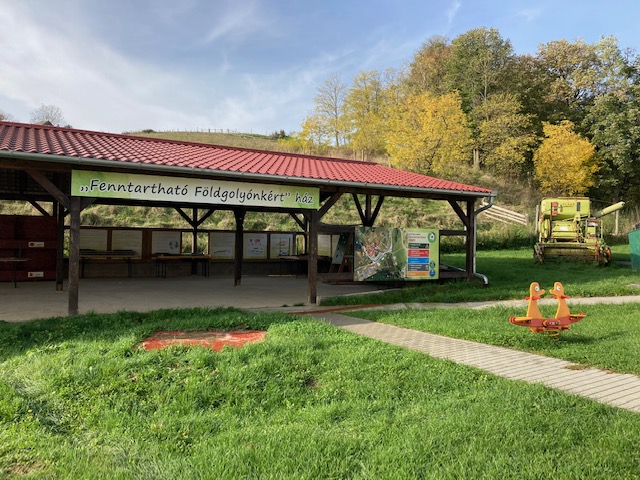
Through 14 panels you can easily learn about sustainable development, ecological footprint, renewables, and what we do for the environment—and what you can do. These panels are 10 years old; a renewed exhibition will open spring 2026.
-
Biomass heat centers and heat pumps:
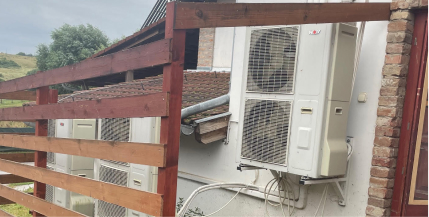
We do not use natural gas. Heating and hot water is provided by biomass boilers (using biodegradable waste and sustainably harvested firewood) in the tourist houses and the camping. Since 2019, we replaced half of biomass heating with air-to-water heat pumps powered by on-site generated electricity. All new buildings already use this technology for heating and cooling.
-
Waste trade:
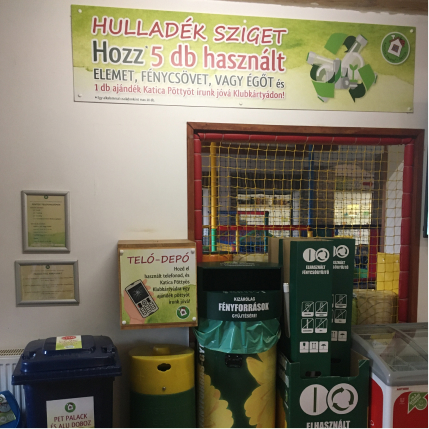
Bring 5 used batteries, light fixtures, or bulbs; deposit them in our collection bins, and in return you get a “Katica Dot” on your Loyalty Club Card, which you can redeem for activities with additional fee! (At family entry, we accept up to 10 items; only Loyalty Club Cardholders may participate.)
-
Used mobile phone collection:
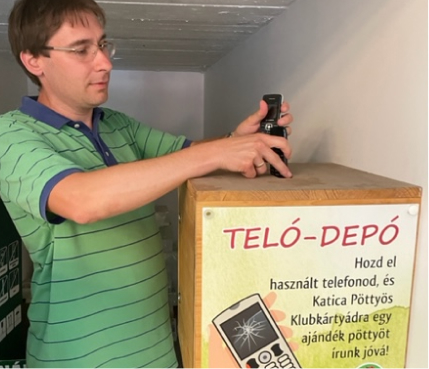
Since autumn 2019, we joined the Jane Goodall Institute’s used phone collection campaign. You can bring unused phones for recycling. Each phone earns one Katica Dot on your Club Card (max 2 per person at a time).
-
Electric go-kart:
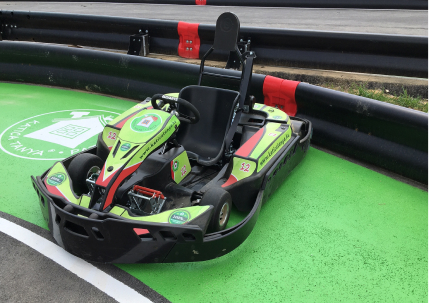
One of our eco-friendly developments is the electric racing go-kart track. This environmentally conscious racing experience offers fun for the whole family. On our 420-meter go-kart track you can enjoy the freedom of driving in our single- or two-seater go-karts, and these machines use electricity produced 100% from renewable sources.
-
Electric car charging station:
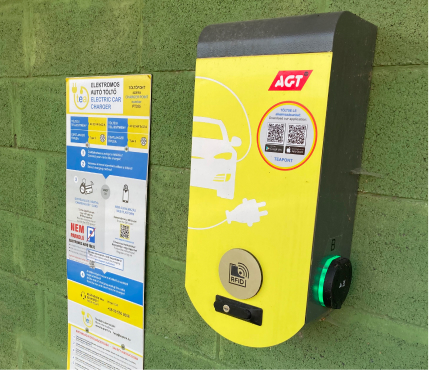
In the parking lot there’s a charger for electric cars. While you enjoy your time here, your car can recharge. The charger requires an app; you’ll find the info on the charger.
-
Motion-sensor LED lights:
In all facilities, low-energy LED lighting is used and many lights turn on only when motion is detected—so lights do not stay on unnecessarily.
-
Push-button taps:
Many taps are push type, reducing water usage while serving the same pupose.
-
Waterless urinals:
Some urinals need no flushing—so they use no water at all.
-
Reduced flow taps:
Many hand-washing taps are equipped with an “air mixer” as a result much less water is consumed. A hand wash uses only 20–30 % of water compared to a regular tap.
-
Composting:
Organic waste generated at the Experience Center (leaves, vegetable scraps from the kitchen, coffee grounds) is not disposed of in the trash, but rather in the compost bin, where it is treated and matured to produce nutrient-rich humus. We save a significant amount of money on spring flower planting by not buying potting soil in stores.
-
Cleaning in a sustainable way:
When washing and cleaning, we strive to use products made from natural, biodegradable materials. The detergents and dishwashing liquids we use contain 90% biodegradable materials.
-
During the winter season, we do not use salt to prevent slippery roads, but instead sprinkle wood ash on the walking surfaces.
-
Smart devices:
Our cooling and heating systems as well as hot water boilers (heat pumps, thermostats) are remotely controllable, and thermostats use time schedules to optimize energy use.

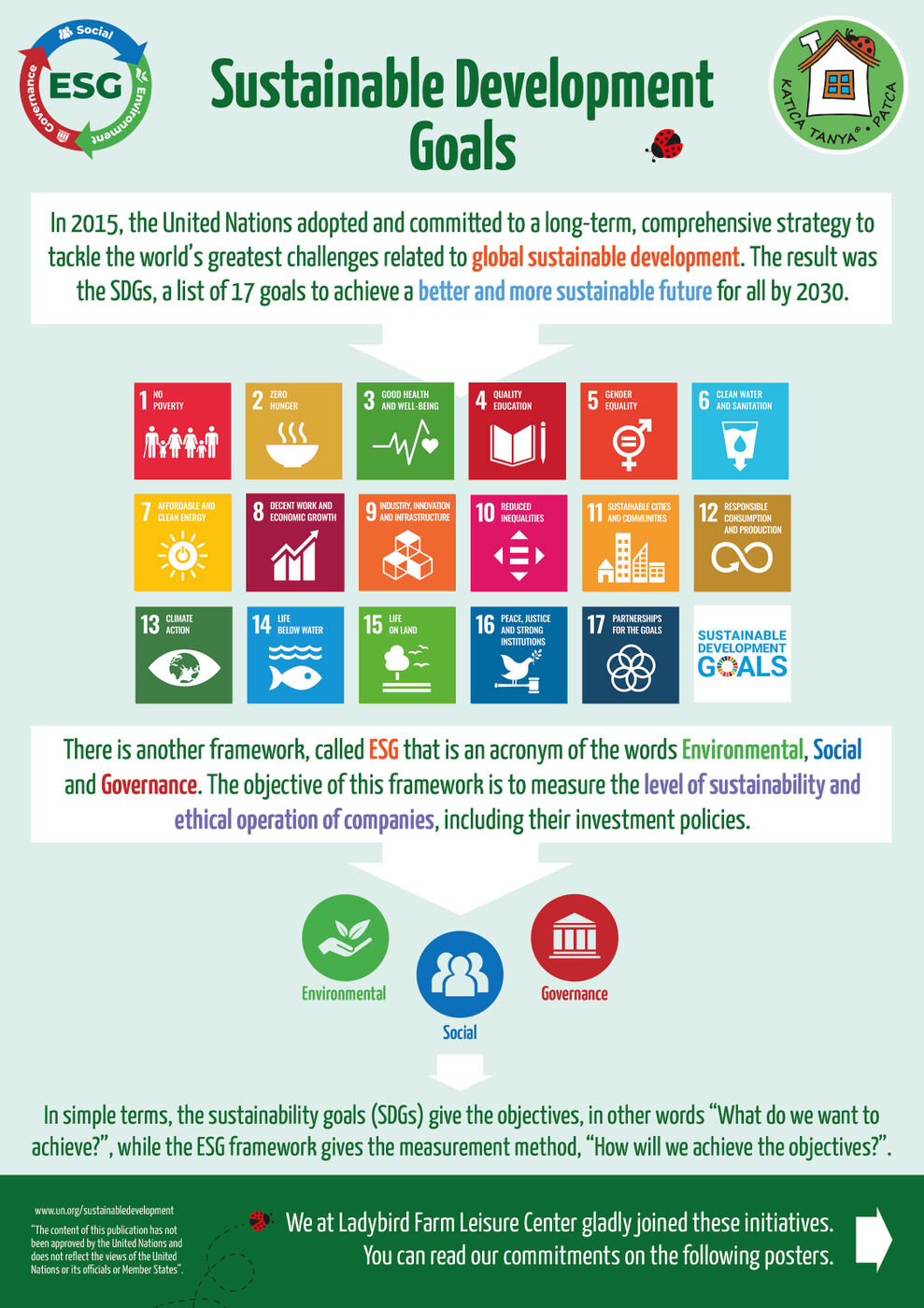
We have joined international initiatives — UN Sustainable Development Goals and their implementation at Katica Tanya
For the past 2 decades, we have put sustainability and minimizing our ecological footprint as a central focus of our operations. Therefore, we have joined this UN initiative that consists of the 17 common goals (Sustainable Development Goals in short, SDGs) in order to support the long-term longevity and peaceful existence of mankind on our planet.
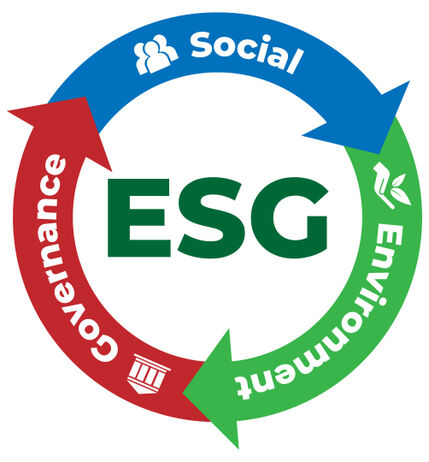
There is also a corresponding framework, called ESG, the Environmental, Social and Governance framework. The objective of this framework is to measure the level of sustainability and ethical operation of companies, including their investment policies.
In simple terms, the sustainability goals (SDGs) give the objectives, in other words “What do we want to achieve?”, while the ESG framework gives the measurement method, “How will we achieve the objectives?”.
We also added an 18th SDG objective that puts aside the purely profit motive and offers alternative performance indicators that aim to measure the environmental impact of our business operations (e.g. kg garbage / 100 visitors)
We at Ladybird Farm Leisure Center gladly joined these initiatives. You can read our commitments on the following posters.